 Alisha Zulfiqar
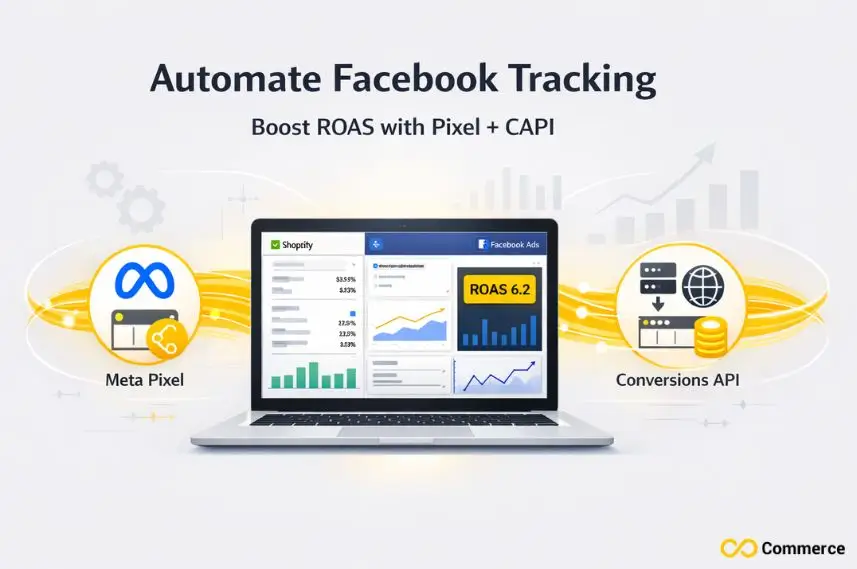
Wondering how to Automate Facebook Tracking to make your ads work smarter, not harder? Running Facebook ads without tracking is like driving blindfolded. You might reach a destination, but it will cost you more than you think. iOS updates are tightening tracking, and ad blockers are getting stronger. So, automating your Facebook tracking is now essential. It helps you keep your ad campaigns profitable. It ensures your data is accurate. Plus, it supports your marketing decisions with real insights.
Quick Summary
Automated Facebook tracking uses Meta Pixel and Facebook Conversions API (CAPI). This setup gathers full customer data, even with ad blockers and iOS limits. This dual approach boosts conversion tracking accuracy. It improves Return on Ad Spend (ROAS) and cuts down manual setup complexity. Shopify stores that use automated tracking usually achieve 20-30% better data accuracy. This leads to more reliable campaign optimization.
How to Automate Facebook Tracking Shopify?
With Facebook tracking automation in Shopify, you can effortlessly track customer actions and see how ads perform. You won’t need to set it up manually. It ensures your Facebook Pixel and conversions API work seamlessly together. This automation saves time and boosts your marketing results with reliable data.
The Imperative for Flawless Facebook Tracking on Shopify
Modern e-commerce faces new tracking challenges. These issues affect your advertising success and profits.
Ad Blockers and iOS Updates
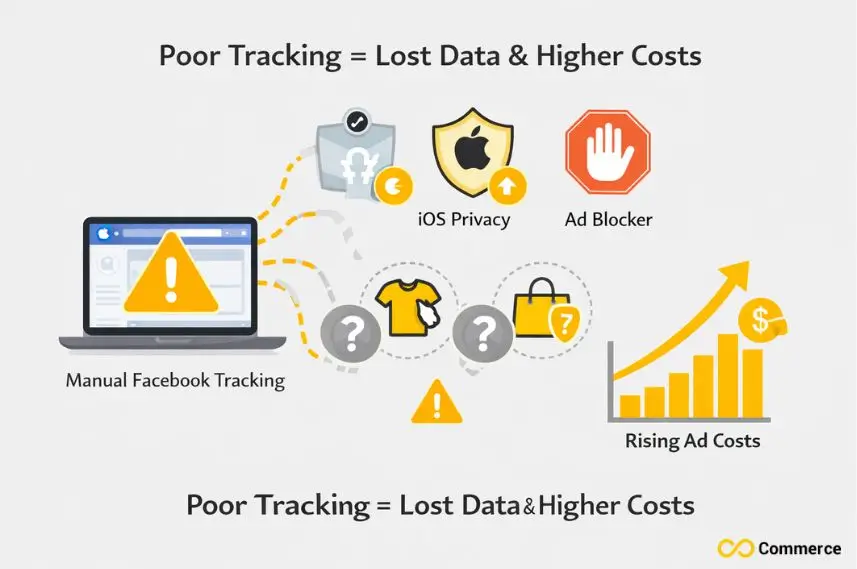
Apple’s iOS 14.5 update fundamentally changed how Facebook Pixel tracking works. When users choose not to be tracked, browser pixels can’t see important conversion events. This data loss creates blind spots in your campaign optimization.
Ad blockers compound this problem by preventing pixel code from loading entirely. About 25-30% of web users use ad blocking software. This creates big gaps in your conversion tracking data.
These privacy changes aren’t just temporary. They mark the new normal for digital advertising. Successful Shopify stores must adapt their tracking strategies to maintain a competitive advantage.
The Cost of Inaccurate Conversion Data
Incomplete conversion tracking creates a domino effect of poor advertising decisions. When Facebook’s algorithm doesn’t have all the data, it finds it hard to spot high-value customers. This makes it tough to optimize ad delivery well.
The financial impact is immediate and measurable. Stores with poor tracking typically experience:
- 40-50% higher customer acquisition costs.
- Reduced campaign performance due to incomplete optimization data.
- Difficulty scaling successful campaigns.
- Wasted ad spend on underperforming audiences.
Without accurate conversion data, Facebook Ads Manager gives wrong performance metrics. This can lead to mistakes in budget allocation and strategy.
Understanding Meta Pixel and Facebook Conversions API
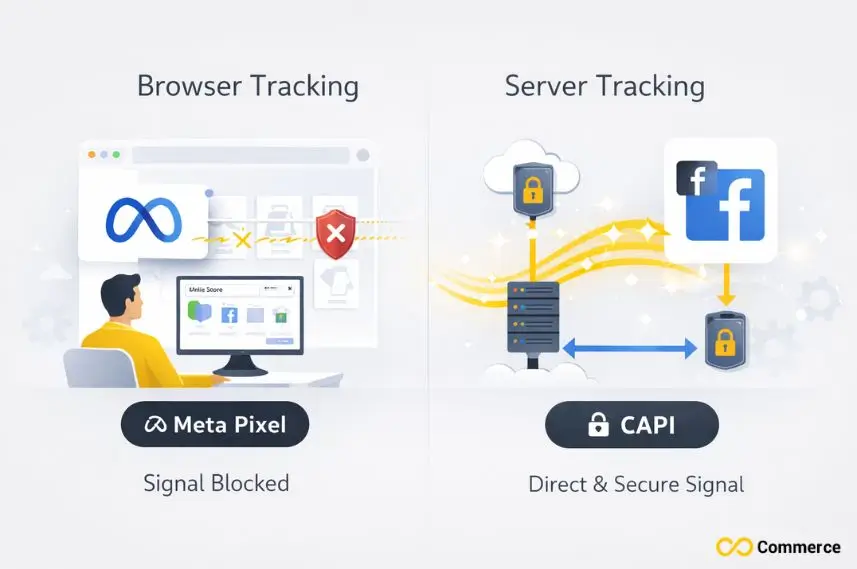
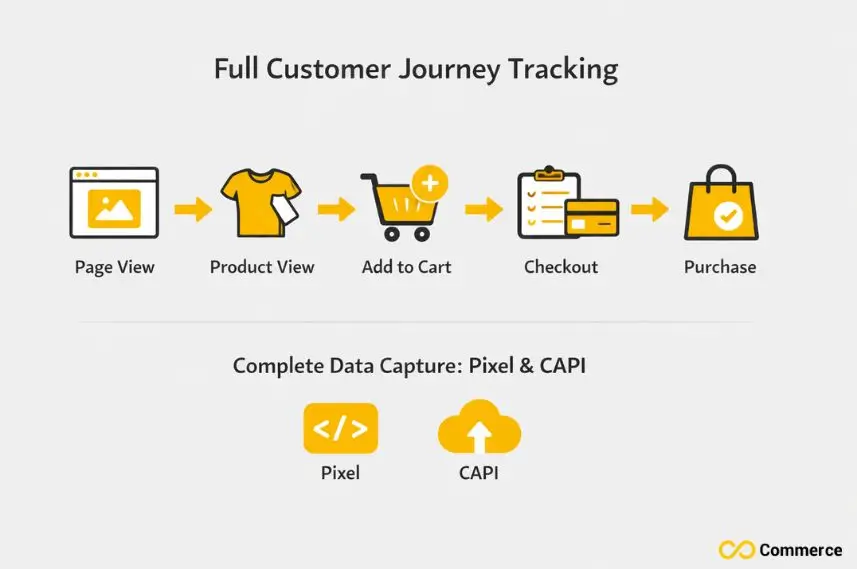
Meta Pixel tracks what customers do in the browser. It records actions like page views and add-to-cart events. It works best with the Facebook Conversions API (CAPI). This API sends conversion data straight from your Shopify store’s server to Facebook.
This server-side tracking bypasses browser limitations entirely. When customers buy something or do something important, your store sends that data to Facebook right away. This happens through secure server connections.
The combination creates redundancy, if pixel tracking fails, CAPI captures the conversion. Automated event deduplication stops double-counting when both systems record the same event. This keeps data accurate.
What Does Automated Tracking Mean for Shopify?
Automation turns Facebook tracking from a tough technical issue into an easy business benefit.
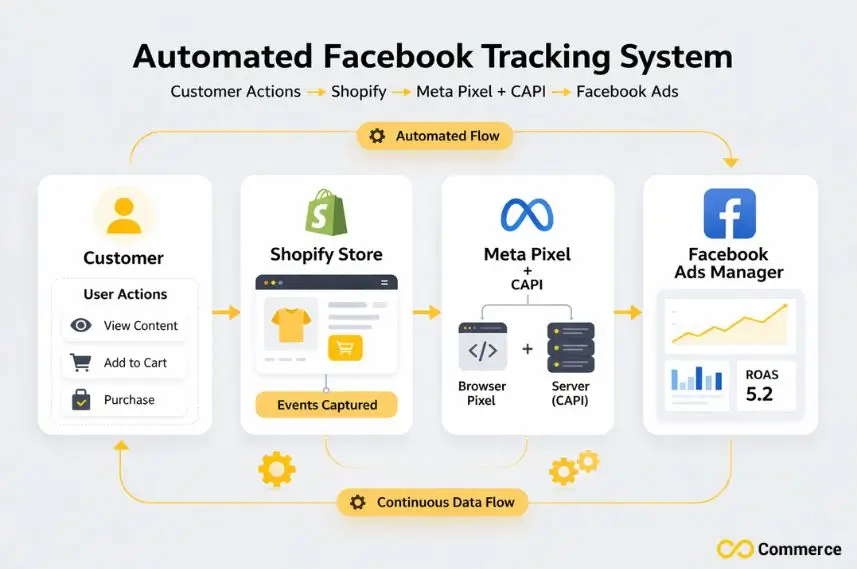
The Essence of Automated Facebook Tracking
Setting up the traditional Facebook Pixel takes a lot of work. You need to configure it manually, implement custom code, and keep up with maintenance. Automated solutions remove these technical barriers. They handle pixel integration, CAPI setup, and event mapping automatically.
Your Shopify store works smoothly with Meta’s advertising system. You don’t need developer skills or ongoing tech support. The system automatically tracks important events. This includes purchases, add-to-cart actions, and page views. It also ensures data quality standards are met.
Automation also includes intelligent error detection and self-correction capabilities. When tracking issues arise, automated systems identify and resolve problems without manual intervention.
The Synergy of Server-Side and Browser-Side Tracking Through Automation
Automated tracking uses both Meta Pixel and Facebook CAPI at the same time. This way, it gathers complete data collection coverage. Browser-side tracking records user actions right away. Server-side tracking helps send conversion data to Facebook, no matter the browser limits.
This dual approach boosts Event Match Quality scores. These scores show how well your conversion data aligns with user profiles on Facebook. Higher match quality improves campaign optimization and reduces cost per conversion.
The automation smartly controls data flow between the two systems. This prevents conflicts and boosts data capture rates at all customer touchpoints.
Superior Accuracy, Reduced Effort and Scalable Growth
Automated Facebook tracking delivers measurable improvements in three critical areas:
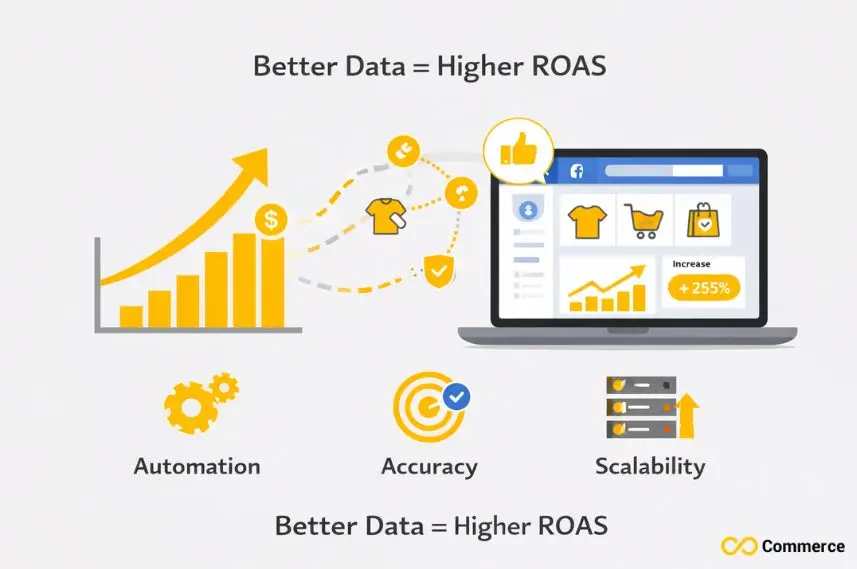
Data Accuracy: This method often boosts conversion tracking accuracy by 25-30%. This is better than pixel-only setups. This enhanced data quality directly improves campaign performance and ROAS calculations.
Operational Efficiency: Setup time drops from weeks to just hours. Ongoing maintenance becomes almost automatic. Marketing teams can focus on strategy rather than technical troubleshooting.
Scalability: As your Shopify store grows, automated tracking expands easily. You won’t need extra technical help or complicated setup changes.
Implementing Automated Tracking
To set up automated Facebook tracking, know your options and their benefits.
Shopify’s Native Meta Pixel Integration
Shopify provides built-in Facebook Pixel integration through the platform’s native features. This integration sets up standard pixel installation. It also captures key conversion events, such as purchases and page views.
However, native integration has significant limitations. It doesn’t have Facebook Conversions API features. It has limited customization. It also lacks advanced features like better event parameters and custom conversion tracking.
Native integration suits basic stores, but growing businesses soon need better tracking solutions.
Dedicated Shopify Apps for Intelligent Automation
The Shopify App Store has tracking apps. They offer automated Facebook tracking features. These apps typically include:
- Complete Meta Pixel and Facebook CAPI integration.
- Automated event deduplication to prevent data inflation.
- Enhanced conversion data with detailed event parameters.
- Real-time data synchronization between your store and Meta Ads.
- Advanced troubleshooting and performance monitoring tools.
Many tracking apps offer easy one-click setups. They manage all the technical details for you. This makes advanced tracking simple for non-technical users.
Meta Business Manager and Events Manager
Automated tracking apps work with Facebook Business Manager and Events Manager. This gives you centralized control over your tracking data. Events Manager is your go-to place for checking data quality. You can fix problems and boost conversion tracking here.
With Events Manager, you can see real-time conversion data. You can also check Event Match Quality scores and spot tracking issues early. This helps prevent problems that could hurt your campaign performance.
The Technical Brilliance Behind Automated Accuracy
Knowing the basics of automated tracking helps you get the most out of it. It also makes it easier to fix any problems that come up.
Server-Side Tracking and Facebook CAPI Explained
The Facebook Conversions API builds a direct link for data. This connects your Shopify store to Facebook’s servers. When customers make purchases, the API sends conversion data right away. This data includes customer info, purchase details, and attribution parameters.
This server-side approach bypasses browser-based limitations entirely. CAPI makes sure Facebook gets full conversion info, even with ad blockers or iOS limits. This helps optimize your campaigns effectively.
Server-side tracking allows better data sharing. It includes customer email addresses, phone numbers, and detailed purchase info that browser-based pixels can’t reach.
Automated Event Deduplication for Pristine Data
Automated deduplication stops double-counting when both Meta Pixel and Facebook CAPI track the same conversion event. This keeps data accurate. The system tracks event IDs and timestamps. It finds duplicate events and merges them into one conversion record.
This process maintains accurate conversion counts while maximizing data quality for campaign optimization. Facebook’s algorithm receives complete conversion information without artificial inflation from duplicate events.
Advanced deduplication deals with tricky situations, like partial data matches. It helps keep your conversion reporting accurate, even if tracking systems get incomplete event details.
Capturing Every Customer Action
Automated tracking extends beyond basic purchase tracking to capture comprehensive customer journey data. Advanced systems automatically track:
- Detailed page view events with product information.
- Add-to-cart actions with specific product data.
- Checkout initiation and progress tracking.
- Custom conversion events tailored to your business model.
This event tracking gives Facebook’s algorithm detailed data on customer behavior. This helps improve campaign optimization and audience targeting.
Bridging the Gap Between Your Store and Meta Ads
Automated systems keep your Shopify store and Facebook advertising data in sync. Conversion events show up in Ads Manager within minutes. This helps you quickly optimize your campaign and adjust your budget.
Real-time syncing helps with advanced advertising strategies. It enables dynamic product ads and quick retargeting campaigns based on recent customer actions.
Transforming Ad Performance
Accurate conversion tracking directly translates into improved advertising performance across all campaign metrics.
Leveraging Accurate Data for Audience Segmentation
Complete conversion data enables sophisticated audience segmentation strategies. Facebook can spot valuable customers by tracking their buying habits, total spending, and engagement patterns. This data comes from automated tracking.
Custom audiences become more accurate when built on comprehensive conversion data. Lookalike audiences work better when based on full customer profiles instead of just partial pixel data.
This targeting precision lowers customer acquisition costs. It also boosts campaign relevance and improves conversion rates.
Optimizing Facebook Ad Campaigns with Reliable Data
Facebook’s campaign optimization algorithm performs best with abundant, accurate conversion data. Automated tracking provides the comprehensive data foundation necessary for effective algorithmic optimization.
Campaign budget optimization distributes spending more effectively when guided by complete conversion information. Ad sets get the right budget based on real performance, not just on partial tracking data.
Stores that use automated tracking often see a 15-25% boost in Return on Ad Spend. This improvement usually happens within 30-60 days after starting the system.
Powering Dynamic Product Ads and Advanced Marketing Strategies
Dynamic product ads need clear product catalog details and accurate conversion tracking to work well. Automated tracking helps Facebook get all the product interaction data it needs. This data is key for optimizing ads dynamically.
Retargeting campaigns become more sophisticated with comprehensive customer journey data. You can build specific audiences using product interactions, purchase history, and engagement levels. These details come from automated systems.
Beyond Metrics to True Customer Lifetime Value
Automated tracking enables deeper customer analytics that extend beyond immediate conversion metrics. Complete data collection helps with Customer Lifetime Value calculations, retention analysis, and advanced attribution modeling.
This view of customer value helps shape decisions on marketing channels, budget, and long-term growth strategies.
Advanced Strategies and Future-Proofing Your Tracking
Maintaining a competitive advantage requires staying ahead of tracking challenges and platform changes.
Automated Monitoring and Troubleshooting
Advanced automated tracking solutions have built-in systems. They spot potential issues early, so campaigns perform better. These systems alert you to:
- Sudden drops in conversion tracking rates.
- Event Match Quality score changes.
- CAPI connection problems.
- Pixel firing errors.
Proactive monitoring stops revenue loss from hidden tracking issues. It also keeps campaign optimization strong.
Automated GDPR and Data Sharing Compliance
Automated tracking solutions now often come with privacy compliance features. They manage GDPR requirements. They also handle cookie consent and data sharing preferences automatically.
These compliance features keep your tracking effective. They also respect customer privacy and meet regulatory rules. The system adapts data collection methods based on customer consent levels and regional privacy laws.
Adapting Tracking to Your E-commerce Evolution
As your Shopify store grows, automated tracking easily adapts. It manages more traffic, larger product catalogs, and more complex customer journeys. Enterprise-level features become available for Shopify Plus stores requiring advanced functionality.
Scalable tracking solutions expand with your business. They don’t need full system changes or complex tech migrations.
The Role of AI in Further Enhancing Tracking Automation
Artificial intelligence increasingly powers automated tracking optimization, including predictive analytics for customer behavior, intelligent event attribution, and automated campaign optimization recommendations.
AI tracking systems learn from your customer patterns. They adjust strategies to improve data quality and boost campaign performance.
How Do You Choose the Best Tracking App?
When selecting an automated tracking solution, focus on its features, the support it offers, and its reliability over time.
CAPI Integration, Event Match Quality, and User Experience
Look for tracking apps with solid Facebook Conversions API integration. Also, check for high Event Match Quality scores. The best solutions achieve match quality scores above 8.0 consistently.
User experience matters significantly for non-technical users. Select solutions that have easy-to-use dashboards, simple setup steps, and thorough documentation. You shouldn’t need developer skills to understand it.
Evaluating Support and Ongoing Updates for Long-Term Reliability
Facebook frequently updates its tracking requirements and API specifications. Pick tracking solutions that have helpful support teams. Also, ensure they offer regular updates to stay compatible with platform changes.
Seek providers with dedicated customer success managers or priority support for complex setups.
Matching Features to Your Business Needs
Small Shopify stores can thrive with simple automated tracking. But larger operations need more. They require advanced features like custom conversion tracking, detailed event parameters, and enterprise-level reporting.
Choose solutions based on your needs, not just on features.
Master Your Meta Ads with Automated, Accurate Shopify Tracking
Automated Facebook tracking is changing how successful Shopify stores handle digital advertising.
The Undeniable Advantage of Automation for E-commerce Success
Stores using automated tracking gain a strong edge. They see better data quality, simpler operations, and improved campaign results. These benefits build up over time. Facebook’s algorithm improves campaigns by using full conversion data.
Automated tracking pays off. It boosts ROAS, cuts customer acquisition costs, and improves marketing effectiveness in all advertising channels.
Final Thoughts
Automate Facebook Tracking by starting your setup with a check of your current Facebook Pixel. Look for any gaps in your conversion tracking data. Visit the Shopify App Store, where you’ll find solutions for full CAPI integration. They also automate event deduplication, ensuring a smoother and more accurate Facebook tracking process for your Shopify store.
When choosing tracking solutions, consider your business growth and select systems that scale with you. Automate Facebook tracking on Shopify. This will boost your competitive edge in the changing digital world. Your future marketing success relies on the strong tracking foundation you build today.
FAQs
You can Automate Facebook Tracking by integrating the Meta Pixel and Conversions API (CAPI). Tools like Infinite Facebook TikTok Pixels automate setup, syncing, and deduplication for accurate tracking.
Turn on the Conversions API in Shopify’s Facebook & Instagram Sales Channel. Choose “Maximum Data Sharing.” This allows for automatic server-side tracking of all conversion data.
Yes, Shopify supports Facebook tracking through the Meta Pixel and CAPI. Apps like Infinite Facebook and TikTok Pixels improve tracking accuracy. They also boost automation and precision in reporting.
Connect Facebook leads to Shopify via Leads Access Manager or automated integrations. This ensures every captured lead syncs instantly for remarketing and better ad performance.
Basic Pixel tracking often misses 20–30% of conversions due to iOS and ad blockers. Automating with Conversions API ensures nearly 100% data accuracy and higher ROAS.

